
Destratification
Reduces electricity consumption by up to 30% of your large spaces by up to 30%
The HVLS fans, are also very useful during the winter In large heated spaces, destratifying The layers (strata) that are created by heating the air...
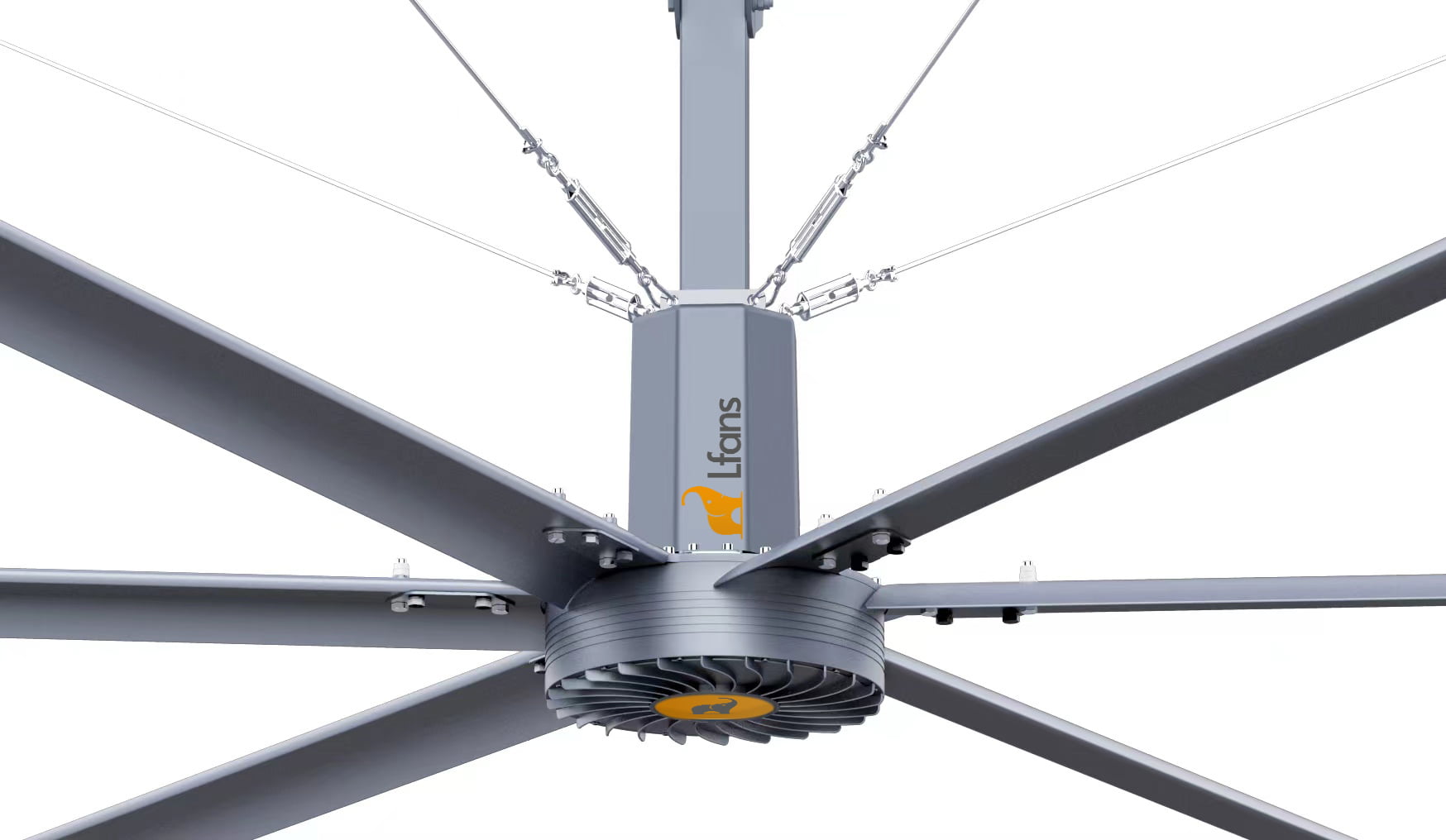
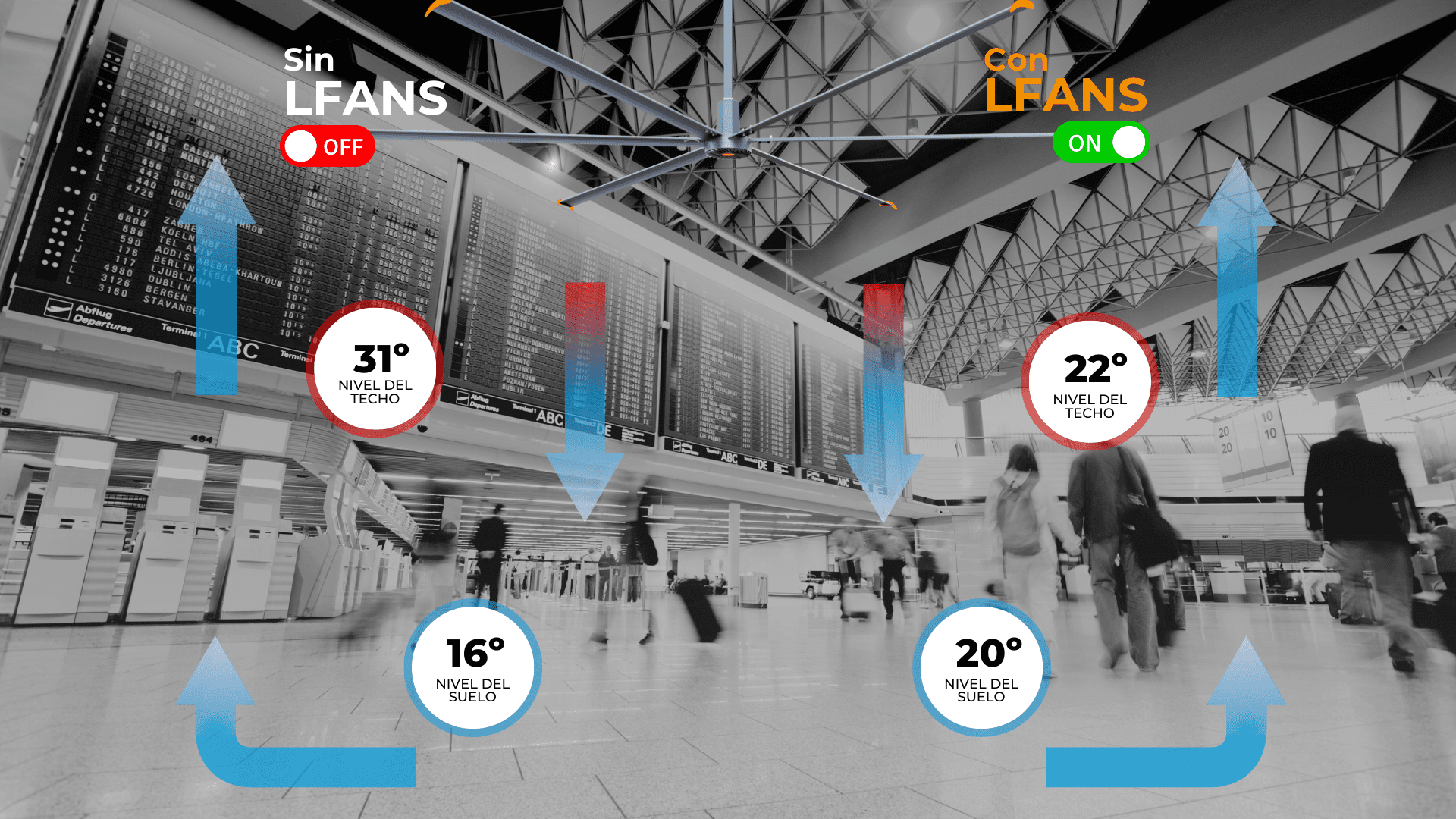
When heat is introduced into a space, layers of temperature or strata are formed. The hottest air rises accumulating in the upper layers of the spaces and the cold air remains on the ground, which is where people work.
This is because air heated by a forced air system (HVAC) is between 5% and 10% lighter than air at desirable ambient temperatures (18°C to 24°C).
The heated air naturally rises to the highest point, where temperatures can reach 29ºC to 52ºC depending on the characteristics of the structure and the height of the roof.
The thermostat, which is usually at ground level, registers the coldest air temperature, indicating to the forced air system that it must continue to work to reach the desired temperature with the consequent additional cost.
With LFANS HVLs fans, a natural air circulation, , preventing the accumulation of hot air in the roofs and the cold air in the ground, breaking those strata y creating a single, in which the temperature is homogeneous with the consequent saving in energy for the forced air system.
Diameter: 7.3 m
Motor: 1.1 kW
Rotation Speed: 55 RPM
Airflow: 13,000 m³/min
Coverage Area: 1,800 m²
Power Supply: 220 V
Magnetic Motor Weight: 36 kg
Blade Weight: 107 kg
Noise Level: 38 dB
Diameter: 5 m
Motor: 0.75 kW
Rotation Speed: 80 RPM
Airflow: 11,000 m³/min
Coverage Area: 1,200 m²
Power Supply: 220 V
Magnetic Motor Weight: 22 kg
Blade Weight: 62 kg
Noise Level: 38 dB